
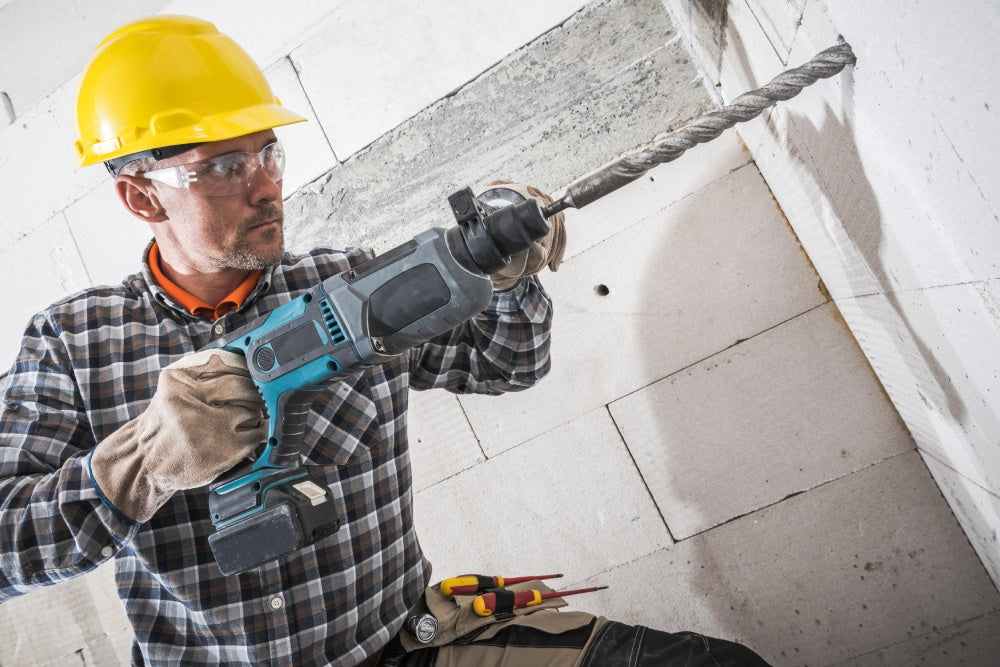
Answering the question "what is a rotary hammer" starts with recognizing its role in jobs that demand strength and accuracy. Professionals often pair it with tasks involving concrete modification or controlled surface removal, which is why terms like demolition-rotary hammer and demolition hammer appear frequently. The tool helps crews work efficiently across construction settings that demand dependable performance.
Answering the question "what is a rotary hammer" starts with recognizing its role in jobs that demand strength and accuracy. Professionals often pair it with tasks involving concrete modification or controlled surface removal, which is why terms like demolition-rotary hammer and demolition hammer appear frequently. The tool helps crews work efficiently across construction settings that demand dependable performance.
Heavy Materials and Structural Drilling
A rotary hammer assists with drilling into dense materials that resist standard equipment. The tool’s power allows steady penetration into concrete, stone, and similar surfaces while reducing strain for the operator. This reliability explains why the demolition-rotary hammer pairing is common in projects that require precision and controlled impact.
The action inside the tool uses a piston-driven mechanism that delivers force against the bit. This process allows the rotary hammer to outperform regular drills when working on reinforced structures. In many applications, the machine complements demolition tools by creating openings and pathways for structural modifications.
Chipping Tasks for Surface Preparation
A rotary hammer handles chipping tasks where surface layers need removal. Thin concrete edges, old mortar lines, or small problem spots respond well to the steady strikes delivered by the tool. This controlled action lets crews prepare surfaces that must be leveled or cleaned before additional work begins.
The tool’s hammer-only mode performs light chipping without adding rotation. This feature helps manage delicate spots that require careful force without damaging material beyond the target area. Users often rely on this mode when they want stability during preparation.
Anchor Installation in Concrete Projects
Rotary hammers are used to create precise holes for anchor systems. These openings must meet exact depth and diameter requirements to secure structural attachments safely. Consistency in those holes directly influences the final strength of connected hardware.
The tool keeps vibration under control, allowing the bit to maintain direction despite the density of the material. This makes it well suited for installing anchoring hardware such as expansion bolts. The tool’s ability to repeat accurate results across many holes keeps demanding installation schedules on track.
Masonry Work in Commercial and Residential Settings
Rotary hammers are commonly used in masonry projects ranging from block walls to detailed brick structures. They create openings for conduits, fixtures, and security hardware that must fit tightly in place. Their power shortens the time needed to penetrate surfaces that would slow standard drills.
Contractors appreciate how the tool manages uniform depth without constant adjustments. This consistency allows finished work to align with engineering or architectural standards. The smooth action also helps maintain the integrity of surrounding materials during sensitive tasks.
Utility Pathways for Plumbing and Electrical Runs
Rotary hammers assist with creating pathways for pipes and electrical conduits. These channels must be formed through materials that resist cutting tools. The hammering action delivers steady progress, making it ideal for preparing routes inside walls and floors.
The ability to shift between drilling and hammer-only modes allows crews to handle different stages of utility installation. Operators can open space with controlled force, then refine the shape before placing lines or hardware. This flexibility helps installations move forward without unnecessary interruptions.
Tile Removal and Renovation Work
Rotary hammers help remove tile, thinset, and other bonded materials during renovation. The hammer-only mode lets workers lift tiles from floors and walls with measured force. This reduces the risk of damaging the substrate that may need to stay in place for future work.
The tool’s weight distribution gives operators better control during long removal sessions. Each strike loosens material without creating excessive debris scatter. This helps maintain a cleaner environment, which is valuable in occupied or sensitive areas.
Concrete Corrections and Surface Adjustments
A rotary hammer can assist with small corrections where concrete must be shaped or trimmed. These tasks often arise when forms shift or edges set unevenly. The tool supplies targeted impact that refines those areas without removing more material than necessary.
Surface adjustments also appear when workers must smooth transitions between pours. By applying consistent force, the tool helps create cleaner lines and safer walking paths. This improves the overall quality of finished surfaces in commercial and residential projects.
Mechanical and HVAC Mounting Preparation
HVAC and mechanical systems often need sturdy mounting points in concrete. A rotary hammer creates the required holes for brackets, plates, and supports. The accuracy of these openings helps maintain long-term stability once heavy equipment is installed.
Routine use in mechanical rooms highlights the tool’s dependability. Technicians rely on consistent performance to meet installation standards. Properly placed openings also simplify future maintenance and inspections.
Roadway and Hardscape Adjustments
Rotary hammers are used to create openings in sidewalks, driveways, and other hardscapes. Workers need these access points for repairs, utility connections, or soil adjustments beneath the surface. The tool’s power moves efficiently through these surfaces, reducing labor time.
Hardscape adjustments require steady control to prevent unnecessary cracking. The rotary hammer’s impact system directs force toward the intended area instead of dispersing it widely. This focused impact helps preserve surrounding surfaces and allows for more effective repair planning.
Finishing Work with Precision
Rotary hammers offer precision during final project stages when small adjustments are needed. These could involve creating channels for finishing hardware or opening tight spaces before installation. The refined control helps maintain accuracy without compromising nearby materials.
Finishing tasks often demand careful handling of edges, corners, and joints. The tool’s mechanical design limits unnecessary vibration, resulting in cleaner outcomes. This allows teams to finalize projects with dependable uniformity.
Versatile Use Across Diverse Job Sites
A rotary hammer adapts to many environments that require dependable drilling or impact force. Construction, renovation, marine applications, and commercial installations all benefit from its capabilities. Its performance helps teams maintain steady production across changing conditions.
The tool handles repetitive work without losing strength over extended sessions. This consistency is valuable on job sites that demand predictable results. Its adaptability makes it a common component of professional toolkits.
Practical Summary for Jobsite Productivity
A rotary hammer contributes measurable value across construction and renovation activities. Its combination of drilling strength and controlled impact handles tasks ranging from structural openings to finishing adjustments. Understanding its range of uses helps workers match it with the right application.
Powerful impact, predictable performance, and adaptable settings place the rotary hammer among the most relied-on tools for demanding jobs. From concrete drilling to surface corrections, its benefits appear across commercial, residential, and industrial tasks. Projects gain efficiency when tools with consistent output are chosen wisely.
Your Source for High-Quality Rotary Hammer Supplies
Knowing when and where to use a rotary hammer helps teams work more efficiently while maintaining control in demanding materials. At Factory Direct Supply, we carry reliable accessories and attachments for demanding rotary hammer applications. For fast shipping, custom orders, and expert guidance on construction materials, contact us to get started.