
Quick Summary
Wedge anchors create a mechanical bond in solid concrete by expanding against the hole walls as the nut is tightened, giving them the holding strength for structural and heavy-duty connections. Contractors use them for railings, ledger boards, equipment mounts, structural steel, and safety systems where a permanent, load-bearing connection into concrete is needed. Picking the right diameter, length, and material keeps the anchor working as designed across indoor, outdoor, and marine environments.
What are wedge anchors used for beyond the basic concrete hookup? Wedge anchors are mechanical fasteners built to hold heavy loads in solid concrete, block, and stone. They work through a simple design: as the nut turns, an internal wedge expands against the sides of the drilled hole, locking the anchor tight.
That grip makes them a go-to choice on job sites and in industrial buildings where a strong, permanent connection into concrete is needed. Here's a closer look at where they get used most.
How Wedge Anchors Hold Their Grip
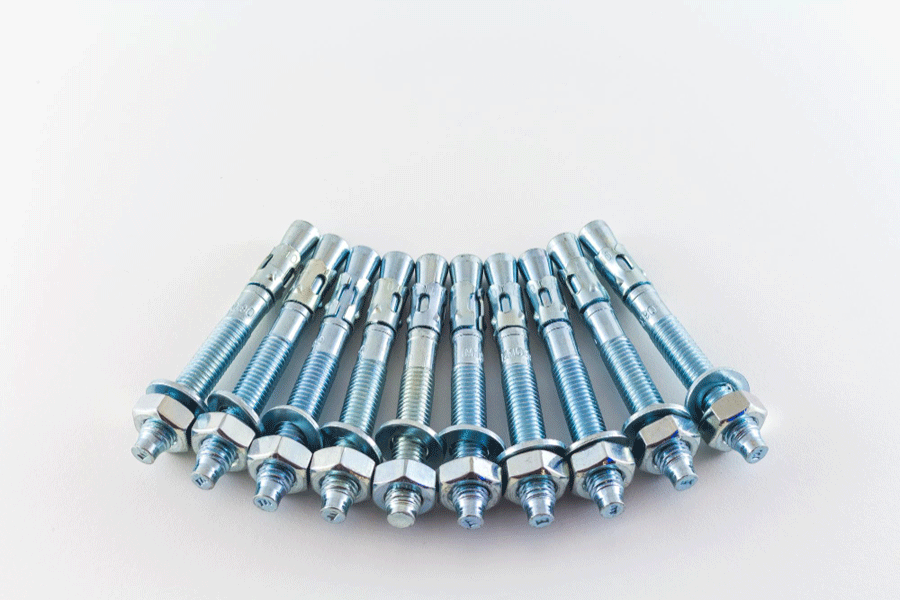
Wedge anchors are made of a threaded stud, a nut, a washer, and an expansion clip near the tip. Once set into a pre-drilled hole and tightened, the clip presses outward against the concrete, creating friction that locks the anchor in place.
Unlike adhesive anchors, they don't need curing time, so they're ready to carry load right away.
1. Structural Steel Connections
Columns, base plates, and beams get bolted to concrete footings and slabs with wedge anchors for a stable, load-bearing joint. Steel erectors also use them for temporary bracing during construction.
2. Handrails and Guardrails
Stairways, ramps, and balconies rely on wedge anchors to keep railing posts firmly set into concrete. A tight post connection keeps the whole railing system stable under daily foot traffic.
3. Mounting Heavy Equipment
HVAC units, generators, compressors, and pumps get bolted to concrete pads to stay put during operation. Vibration from running machinery puts constant stress on the base connection over time.
4. Ledger Boards and Decks
Deck ledgers and patio structures attach to concrete foundations with anchors sized for outdoor exposure, often paired with stainless steel hardware to hold up against weather and moisture over time.
5. Shelving and Racking Systems
Warehouse and storage racks depend on anchors that keep the base stable under repeated loading. With product stacked several levels high, a loose base connection turns into a safety concern fast.
6. Fencing and Gate Posts
Fence posts and gate hardware get set into concrete footings for long-term stability, keeping gates swinging true and posts standing straight under heavy traffic.
7. Fall Protection Systems
Anchor points for harnesses and guardrail systems on rooftops and elevated platforms need dependable hold. Since these connections support a worker's full body weight during a fall, installers follow manufacturer specs closely for embedment and torque.
8. Signage and Light Poles
Road signs, parking lot poles, and commercial signage mount to concrete bases with heavy-duty anchors. Wind load plays a big factor here, so anchor size and spacing get calculated to keep poles standing upright through storms.
Choosing the Right Wedge Anchor
Picking the correct anchor comes down to diameter, length, and material. Diameter and length should match the load the anchor carries and the thickness of the base material, with enough embedment depth to reach solid concrete below any surface layer. For material, zinc-plated anchors work fine indoors, but outdoor, marine, or high-moisture settings call for stainless steel, typically 304 or 316 grade, to resist corrosion over time.
Getting these details right on the front end saves a lot of rework down the line. Drilling the hole to the exact diameter listed on the packaging counts too, since a hole that's too wide won't let the clip grip properly.
Get the Right Wedge Anchors for Your Job at Factory Direct Supply
Factory Direct Supply has given contractors and builders direct access to solid construction supplies since 2000, without the runaround, and wedge anchors have been part of that lineup from day one. We stock a wide range of sizes and grades from trusted names like Simpson Strong-Tie, so you're not stuck guessing which anchor fits your project.
Our team knows these products inside and out and can point you toward the right choice for concrete, block, or stone. Orders over $50 ship free, and if you need something custom or hard to find, we're set up to source it. If you're outfitting a job site in Florida or ordering from anywhere in the country, we're ready to help. Reach out or place your order today and get anchors that hold up to the job.