
Quick Summary
Tapcon screws thread directly into pre-drilled holes in concrete or masonry, offering fast, removable connections suited for lighter loads like fixtures and trim. Wedge anchors expand mechanically against the hole walls, delivering higher holding strength for permanent, structural connections that carry heavy loads. The right pick between tapcon vs wedge anchor comes down to load requirements, removability needs, and the hole size the material allows.
Contractors comparing tapcon vs. wedge anchor options often get stuck between two solid choices that work in different ways. Both fasten into concrete, block, and brick, but they're built for different jobs and different load ranges.
Tapcon screws thread directly into a pre-drilled hole, while wedge anchors use mechanical expansion to grip the surrounding material as they're tightened. Picking the right one saves time, money, and callbacks down the line.
What Is a Tapcon Screw?
Tapcon screws are self-tapping concrete screws made from hardened steel, with a specialized thread pattern cut to bite directly into concrete, brick, or block once a pilot hole is drilled. No separate anchor sleeve or expansion clip is needed, since the threads create their own grip as the screw is driven in.
They typically range from 3/16 inch to 1/4 inch in diameter and come in hex head, flat head, and phillips styles to suit different finish needs.
What Is a Wedge Anchor?
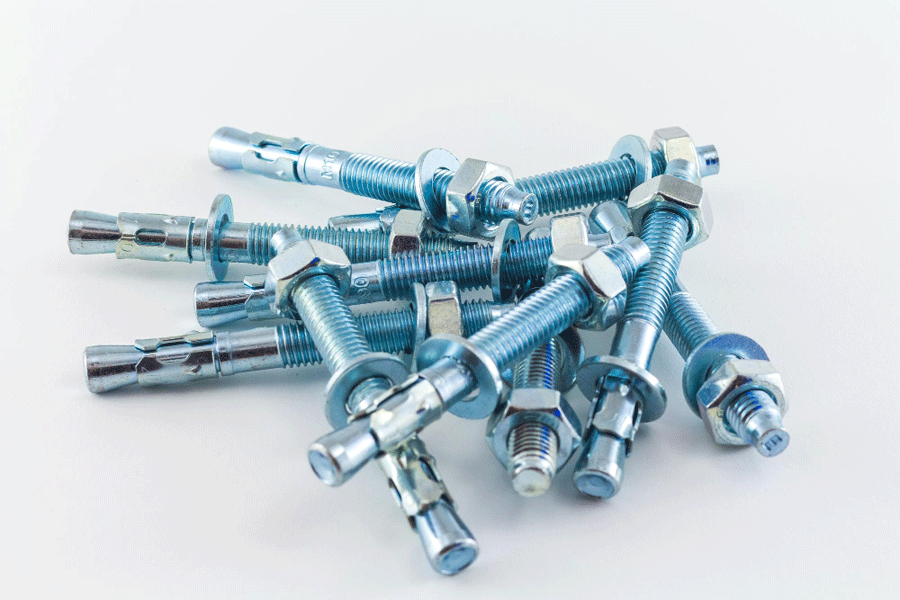
Wedge anchors are mechanical expansion fasteners built from a threaded stud, a nut, a washer, and an expansion clip. Once seated in a drilled hole, tightening the nut pulls the clip outward against the concrete, locking the anchor permanently in place.
Diameters typically run from 1/4 inch up to 1 inch, built for higher load capacities than concrete screws can offer.
How Each One Gets Installed
Installing a tapcon screw starts with drilling a pilot hole using a carbide-tipped bit sized to match the screw diameter, usually 3/16 inch or 1/4 inch. Clear the dust from the hole, line up the screw, and drive it in with a drill or impact driver until the head sits flush against the material. The whole process takes a couple of minutes per screw and needs no extra hardware beyond the bit and the screw itself.
Wedge anchors take a few more steps. Drill a hole matching the anchor's rated diameter and depth, clean out the dust and debris, then tap the anchor into the hole until the washer and nut sit flush against the surface. From there, tighten the nut with a wrench or socket to the torque spec listed by the manufacturer, which pulls the expansion clip outward and locks the anchor into place. Getting the hole depth and cleanliness right makes a real difference in how much load the anchor can carry once it's set.
Key Differences Between Tapcon Screws and Wedge Anchors
- Holding strength
Wedge anchors carry noticeably more load than tapcon screws, thanks to the mechanical expansion clip that locks into the concrete. Tapcon screws hold well for lighter fastening jobs, but they're not built to carry the heavy structural loads a wedge anchor manages.
- Installation
Tapcon screws install fast. Drill a pilot hole with a matching carbide bit, drive the screw in with a driver, and the job is done. Wedge anchors take a bit more setup, since the hole needs to match the anchor diameter closely and the nut has to be torqued to spec for full holding power.
- Reusability
Tapcon screws can be removed and reinstalled a handful of times without much trouble, which makes them handy for temporary or adjustable setups. Wedge anchors are built for a one-time, permanent installation. Once the clip expands, pulling it back out weakens the connection.
- Cost
Tapcon screws cost less per unit and work well for budget-conscious jobs with lighter loads. Wedge anchors cost more but earn that difference back on projects where load capacity and a permanent hold are the priority.
- Size range
Tapcon screws stay in a narrower diameter range built for lighter fastening. Wedge anchors span a wider range of diameters and lengths, giving contractors more options for heavier structural work.
- Material and finish
Both fasteners come in zinc-plated steel for general indoor use, along with stainless steel options, usually 304 or 410 grade, for outdoor, marine, or corrosive environments. Matching the finish to the surroundings keeps either fastener from corroding and losing strength over time.
When to Use Tapcon Screws
Tapcon screws work well for electrical boxes and conduit runs, trim and molding, light fixtures, shelving brackets, sign faces, and temporary mounts that might need to come down later. They also come in handy for furring strips, door and window frames, and cable trays where the load stays light and the connection sometimes needs adjusting.
They're a solid pick any time the load is light to moderate and the connection doesn't need to carry serious structural weight.
When to Use Wedge Anchors
Wedge anchors are the better call for structural steel connections, heavy equipment mounts, handrails and guardrails, fall protection anchor points, and racking systems carrying stacked loads. They also show up in machine base plates, curtain wall anchors, and any application governed by an engineered load spec, where the connection has to meet a documented pull-out and shear rating.
Any job where the connection needs to hold serious weight over the long haul points toward a wedge anchor rather than a screw.
Making the Right Call for Your Project
Load capacity is the biggest factor in this decision. If the fastener needs to support heavy, ongoing weight or a structural connection, a wedge anchor is the safer pick. If the job calls for a lighter, faster install that might need to be adjusted or removed later, a tapcon screw gets the job done without overbuilding the connection.
Base material thickness also plays a role, since wedge anchors generally need more depth to seat the expansion clip properly, while tapcon screws work in shallower material. When a project falls under an engineered spec or building code requirement, check the drawings or a structural engineer's recommendation before settling on either fastener, since the load rating on paper should always guide the final choice over guesswork on site.
Get Concrete Screws and Wedge Anchors at Factory Direct Supply
Factory Direct Supply has stocked contractors and builders with dependable fasteners since 2000, and that includes a full lineup of concrete screws and wedge anchors in a range of sizes, lengths, and finishes. Our concrete screw selection includes Simpson Titen HD, Titen Turbo, and DeWALT Screw-Bolt+ and Ultracon+, built for the same fast, reliable performance contractors count on for everyday fastening work.
Whichever fastener type fits the job, our team can point you toward the correct diameter, length, and grade for the material and load involved, and we carry the drill bits, drivers, and torque wrenches to go along with them. Orders over $50 ship free, and if a size or style isn't on the shelf, we're set up to source it and get it to your job site fast. Contact Factory Direct Supply today and get the right fastener for your next project.