
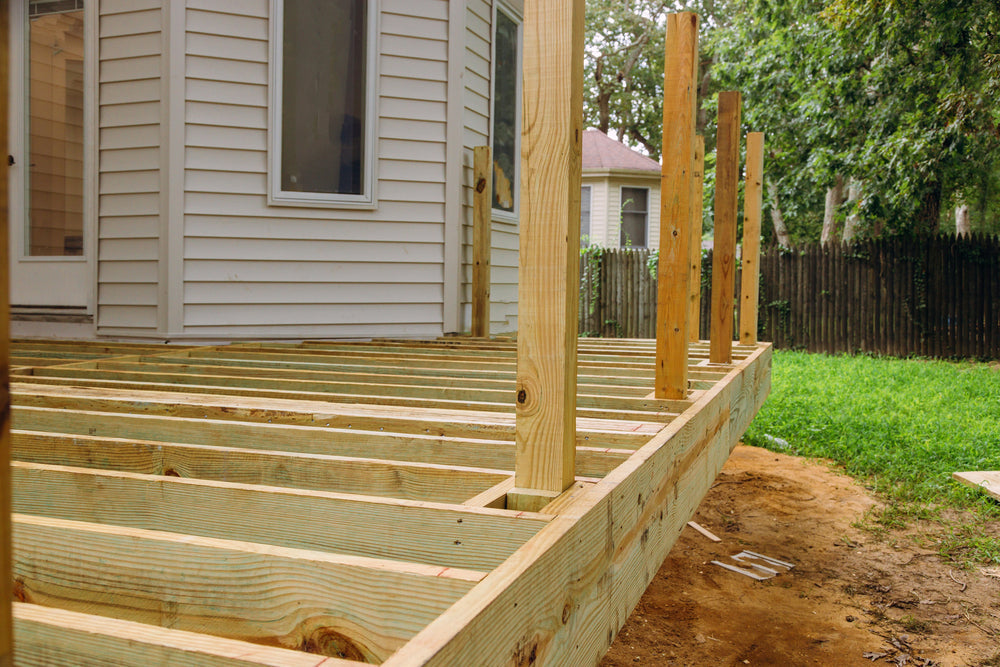
When building a deck, proper spacing and blocking of the deck joists are key to the structure's stability and safety. Deck joist spacing allows deck boards to be supported evenly and handle weight without buckling. Blocking, which ties joists together, adds additional strength and prevents twisting and warping over time.
When building a deck, proper spacing and blocking of the deck joists are key to the structure's stability and safety. Deck joist spacing allows deck boards to be supported evenly and handle weight without buckling. Blocking, which ties joists together, adds additional strength and prevents twisting and warping over time.
Understanding Deck Joist Spacing
The spacing between deck joists is important for the structural integrity of the deck. Joists are typically spaced either 16 inches or 24 inches apart, depending on the decking material and the weight it needs to support. For heavier or angled decking, 12-inch spacing can create added strength and durability so that the deck is sturdy underfoot and able to handle additional weight, such as outdoor furniture or large gatherings.
For decking made from heavier materials or when dealing with a more extensive deck, tighter joist spacing is necessary. 12-inch spacing minimizes the flexing of deck boards, creating a firm and durable surface. On the other hand, 24-inch spacing works well for lighter materials, though it may result in slightly more flex under heavy loads. Always consider the material specifications and load requirements when choosing your joist spacing.
The Importance of Deck Joist Blocking
Deck joist blocking is the practice of adding short pieces of lumber between joists to prevent them from twisting or spreading apart. Blocking also helps distribute the weight of the deck more evenly. Regularly spaced blocking, typically every four to six feet, increases the overall strength of the frame, keeping it level and square over time. This added structural support reduces the chances of the deck sagging or shifting during use.
Simpson Strong-Tie connectors are often used in conjunction with blocking to add extra reinforcement where joists meet beams or support posts. These connectors can help distribute the load even more effectively, making the deck more secure. Installing blocking correctly is especially important in decks that experience a lot of foot traffic or hold heavy equipment for the integrity of the framework long after the construction is complete.
Joist Spacing and Deck Material Compatibility
Choosing the correct joist spacing is closely tied to the type of decking material used. Composite and PVC decking materials typically require closer joist spacing, often 16 inches apart, to prevent flexing and sagging over time. These materials are more rigid, but they need proper support to avoid bowing or warping under pressure.
On the other hand, wood decking is generally more forgiving when it comes to spacing, as wood is more flexible and can expand and contract with temperature and humidity changes. For wood decks, 24-inch joist spacing is acceptable for standard decking, though tighter spacing can be used for increased support. Understanding the material's properties is integral when planning the proper spacing for a deck.
Best Practices for Installing Deck Joist Blocking
Installing deck joist blocking involves cutting and placing short pieces of lumber between the joists. These blocks should be tightly fitted and fastened securely using exterior-grade screws or nails. Blocking is generally installed in the middle of each span between two support beams or posts, as this is where the most strain occurs on the deck.
In addition to preventing joist movement, blocking helps with the overall alignment of the deck frame. It helps to maintain a level structure and eliminates the possibility of the joists twisting over time. Using treated lumber for blocking helps resist moisture and extend the life of the deck structure, which is important for decks exposed to weather elements.
Why You Should Consider Using Simpson Strong-Tie Connectors
Using Simpson Strong-Tie connectors for deck joist framing can enhance the overall stability and durability of your deck. These connectors are designed to improve the connection between various framing elements, including joists, beams, and posts. They are highly regarded for their added security, especially in high-stress areas where joists meet beams.
When used in combination with properly spaced and blocked joists, these connectors help to distribute weight more efficiently and reduce the likelihood of movement. If you are building a new deck or reinforcing an existing one, incorporating Simpson Strong-Tie connectors into your project can make a significant difference in terms of safety and longevity.
Building a Strong Deck with Proper Joist Spacing and Blocking
Incorporating proper deck joist blocking and maintaining the correct spacing between joists is vital for the overall strength of your deck. By following these best practices, you can see to it that your deck will remain safe, level, and durable for years to come. Whether you use wood, composite, or another material, spacing and blocking should always be considered to support your deck's long-term performance.
Ready to Build Your Deck?
Factory Direct Supply offers a wide range of high-quality materials for your deck building needs, including connectors, anchors, saw blades, and more. Contact us to get started on your next project and to explore our fast and free shipping options.